In this month’s edition:
- Down on the farm 82 last month 9/25 – Tony Palmer
- LAA Leicester Rally
- Regulation Changes Affecting Your License from 1st October
- I got away with that – but maybe only just! – Richard Griffiths
Down on the farm 82 last month 9/25
Klemm L25C G-ACXE Fly-in at Kittyhawk
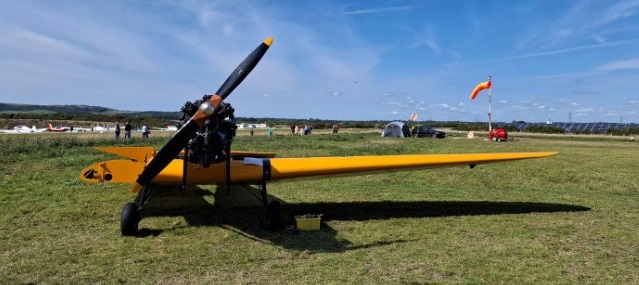
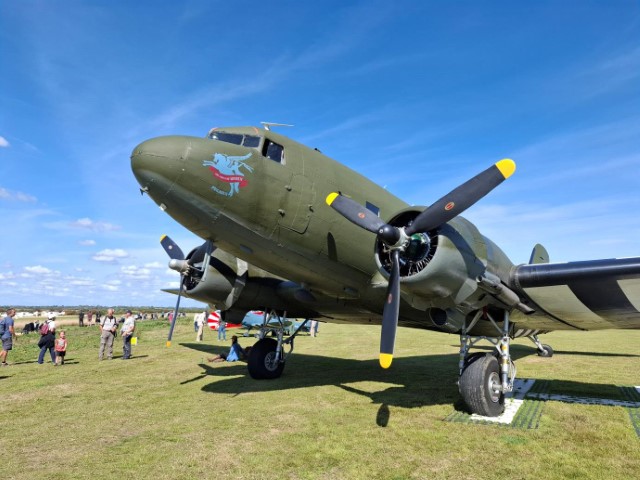
The Klemm was flown to the fly at Kittyhawk getting there early as it is non radio and it was going to be very busy during the day. The weather was fairly demanding for a plane of her age as crosswind landing were just not done normally in 1934 (a big circle of grass and land into wind was the norm) and the rudder is a bit small because of it. The fly-in was exceptional, with a huge attendance and a very professional air display. We had a late Griffon powered Spitfire doing a display including a low and fast pass down the runway. A semi modern copy of a Yak 3 with a big American round engine doing a great display and a 3 ship Stampe aerobatic display. Aero legends brought their C47 which seemed huge among the normal light planes and it caused a stir when it taxied out and took off, it just seemed enormous and the noise and sight was inspiring as took of just yards from the spectators.
Prentice G-APPL VR189
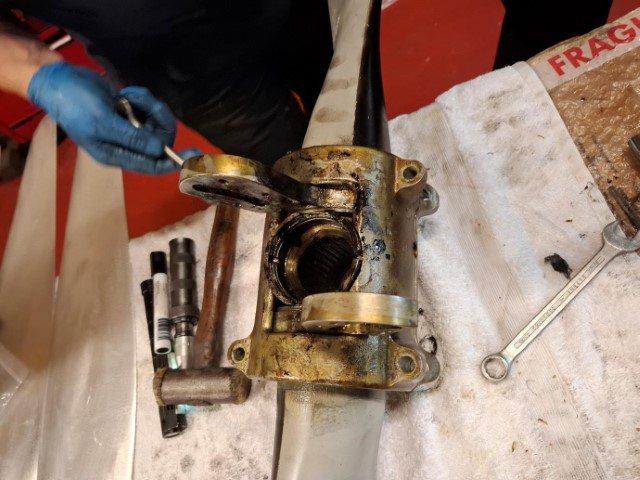
We managed to get the propeller off after a lot of persuasion and took down to Deltair in Hants to be checked out and serviced as it is a De Havilland constant speed unit and this particular model sufferers from corrosion at the base of the forged aluminium blades. So Chris took it apart while we waited to see if it was a goer or scrap, it looks like it will be usable after some work as long as it is in limits.
Beagle Terrier G-ATDN TW- 641
I have been checking it over and the plane is generally in very flyable condition. I managed to pick up a second hand Funke 8.33 radio and mode S transponder at the LAA show recently. The headset sockets are Nato so I will change them to conventional and add a USB double socket. I have recovered the door cards and the bulkhead and hatch behind the 3rd passenger seat. I purchased spray cans with the camouflage colours in matt cellulose and also in silver to block the sun on the fabric.
LAA rally
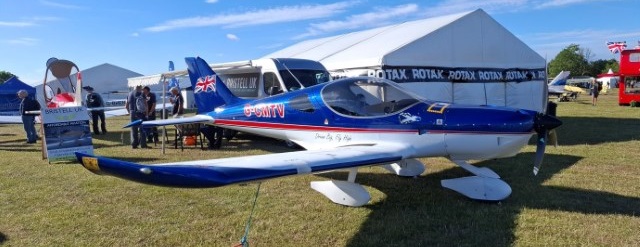
BristellUK attended the show but generally it was a bit of a dead loss as the weather was very poor. Saturday was the best attendance with most pilots driving instead of flying in. Sunday the forecast was terrible for about 13.00 onwards with the organisers’ allowing early departure to exhibitors on safety grounds.
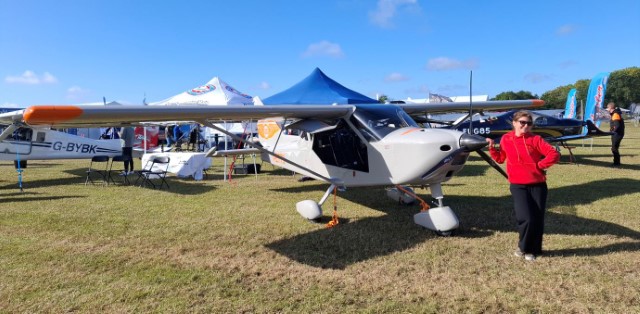
There were quite a few foreign super microlights on display at almost ¼ million apiece. The Trail importers were late arrivals as they flew their new side by side demonstrator from Italy because they had suffered a broken exhaust in France and had to wait while a new one was shipped to them. They arrived late on the Friday but I think it was worth waiting for as it seemed a sensible addition to their range.
We had Bill one of our customers fly down from Aberdeen and he displayed his plane on our stand, he has fitted the 915is engine with constant speed MT prop and had flown single handed to and from Oshkosh with it last year.
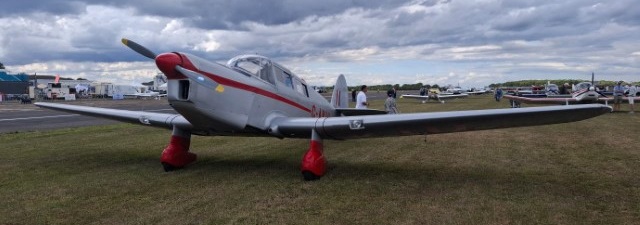
Next club night October 1st 2025
The club subscriptions will stay at £25 this year as it just covered the Xmas meal cost and will hopefully cover next year’s prices.
Please, PLEASE can we have club members come up with things to do this year!!! Maybe organise trips out to museums, flyouts, someone to do an interesting talk??
Tony Palmer
LAA Leicester Rally
The slide-show below is a random collection of photographs of the rally on Friday. Click on the right hand side arrow to view.
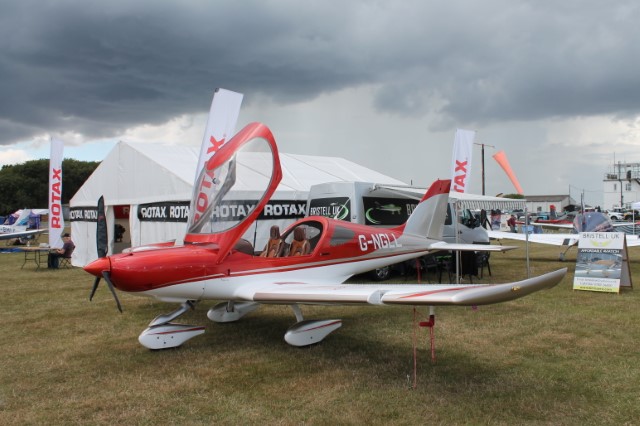
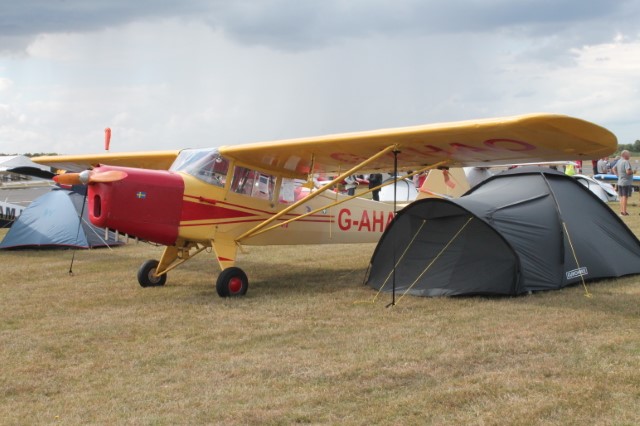
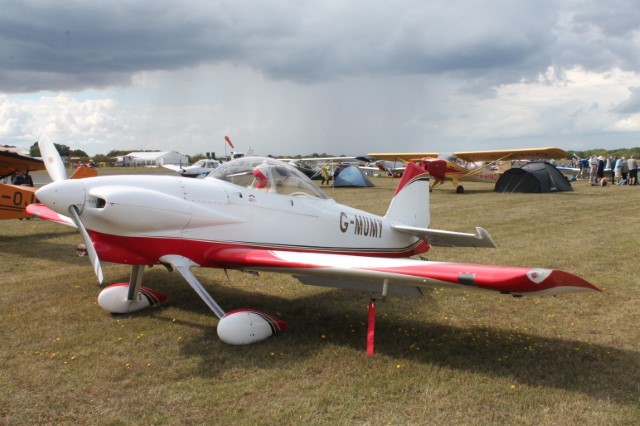

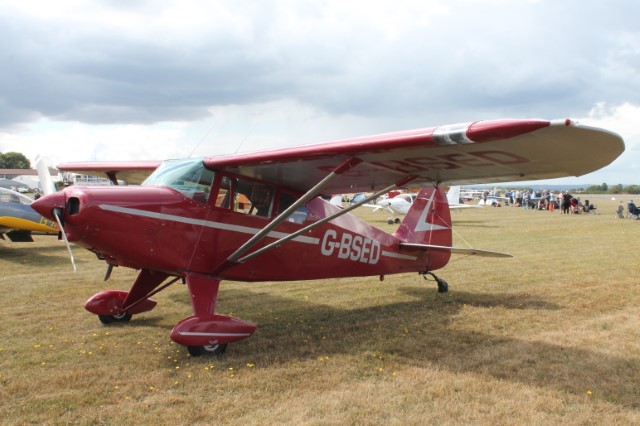
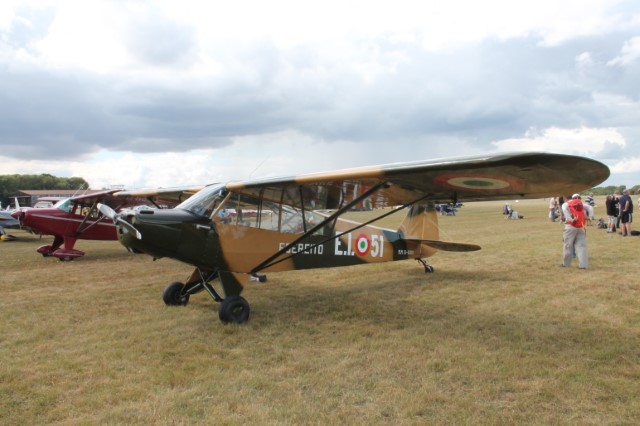
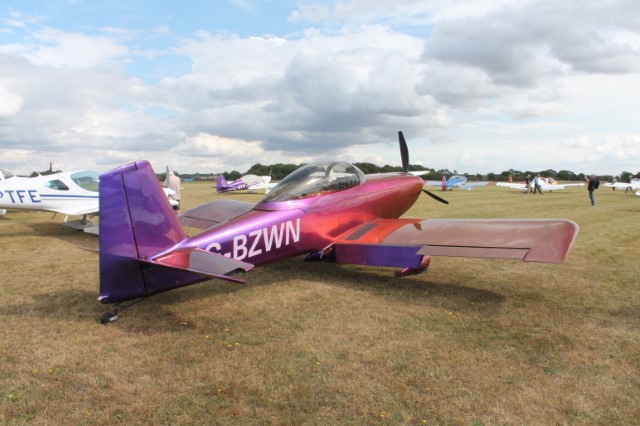
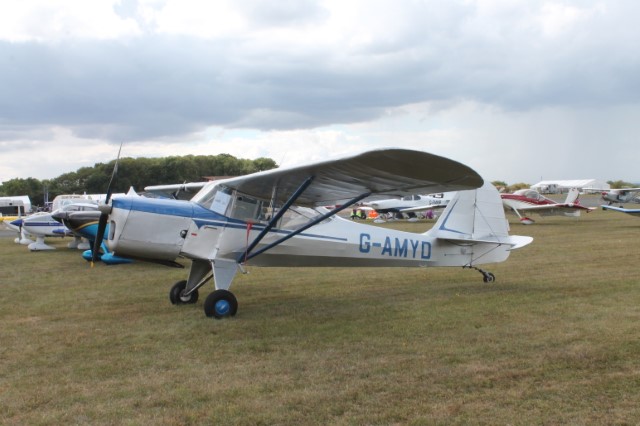
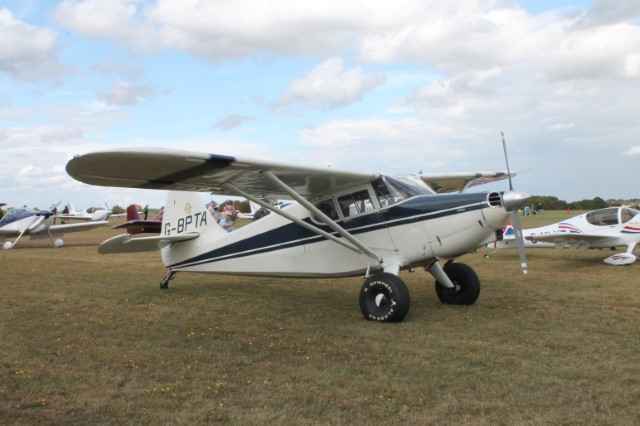
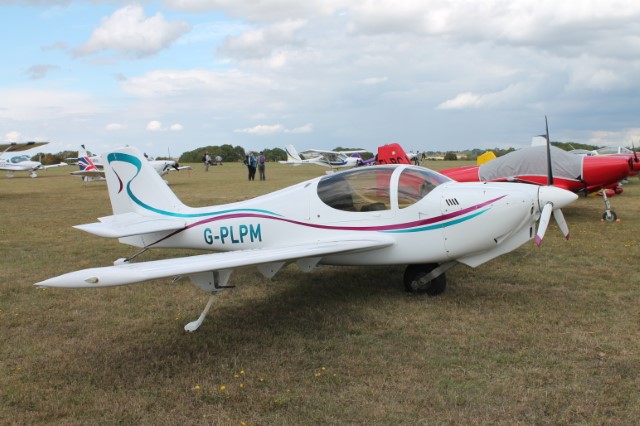
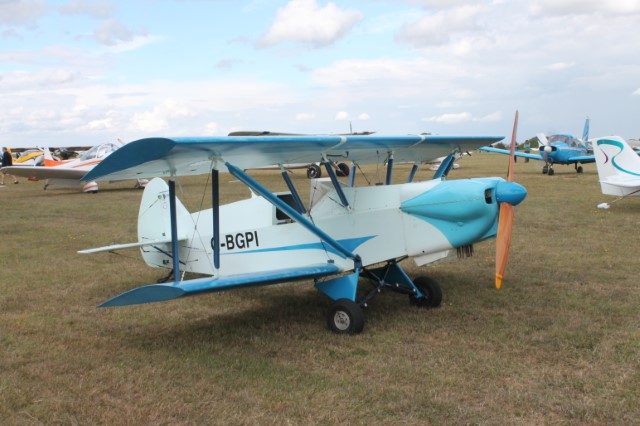
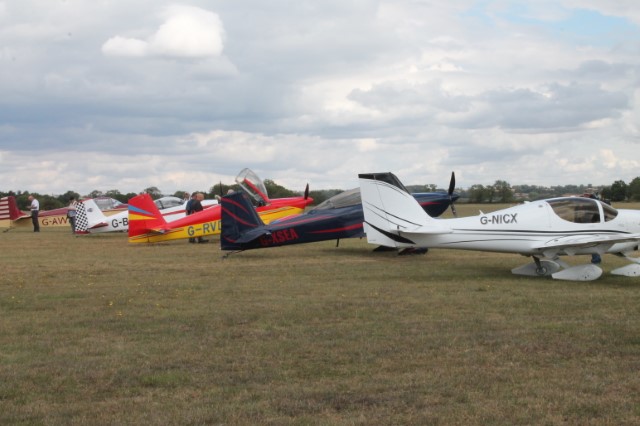
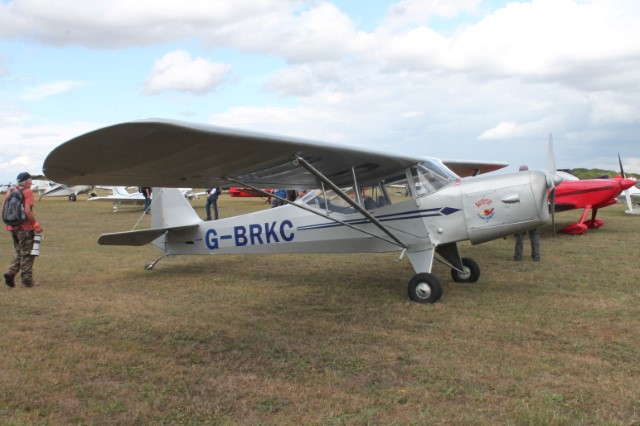
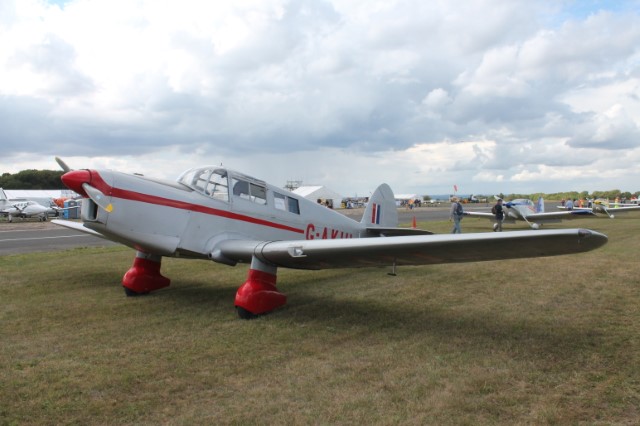
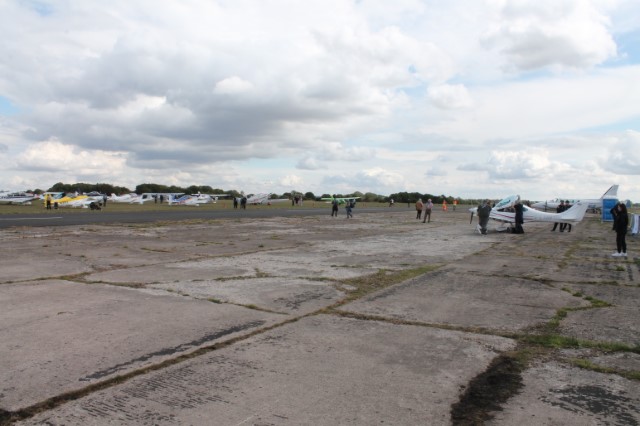
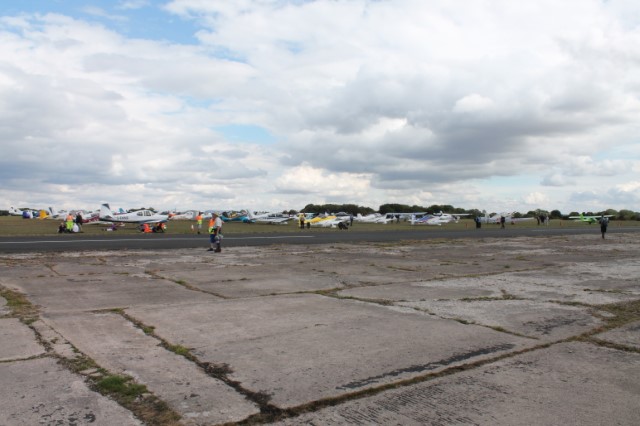
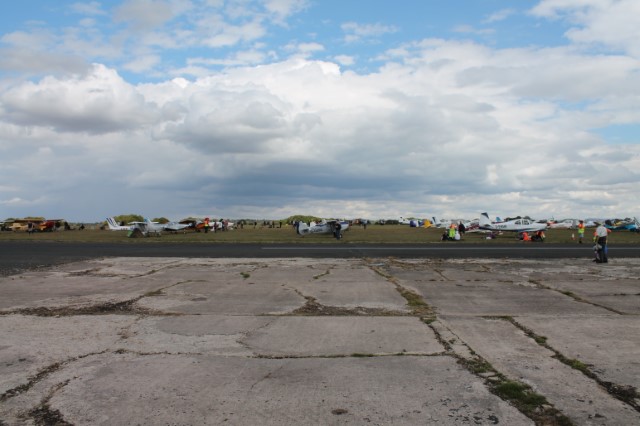
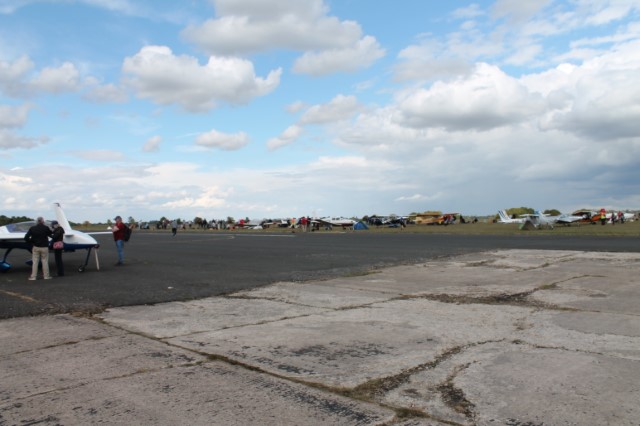
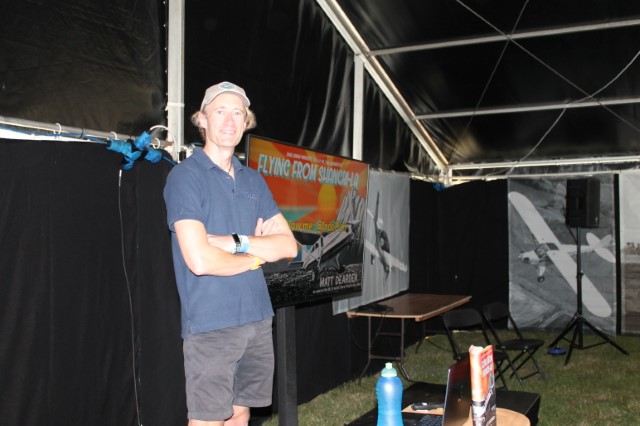
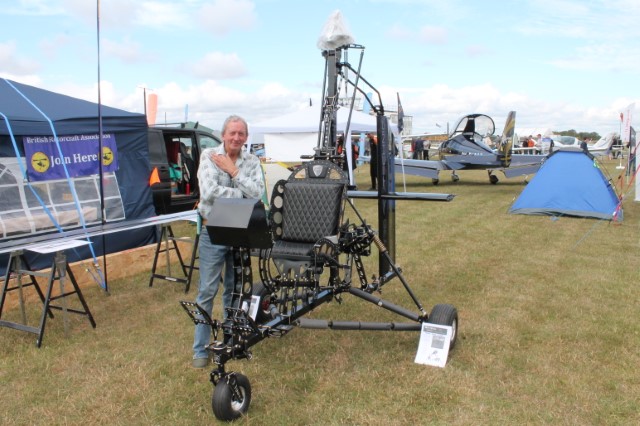

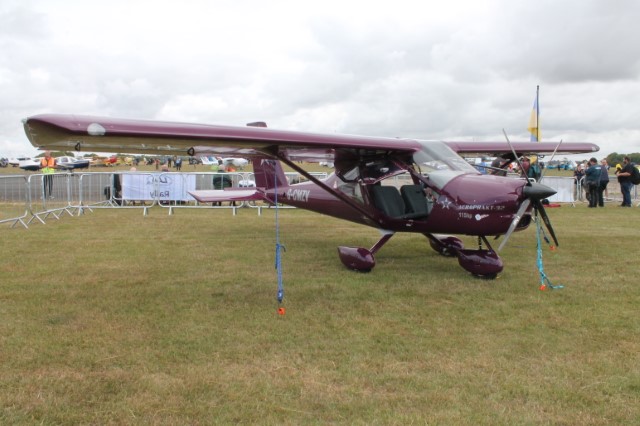
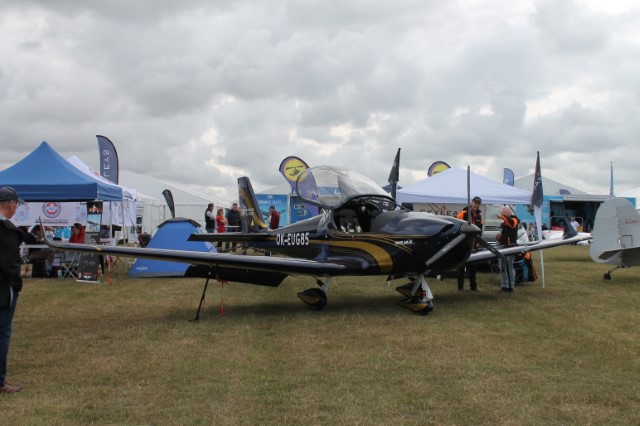
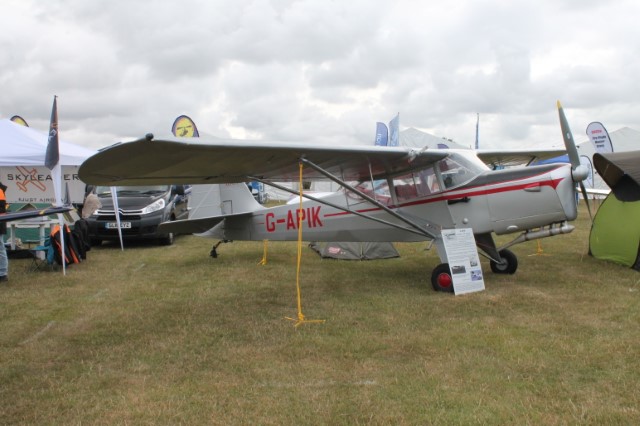
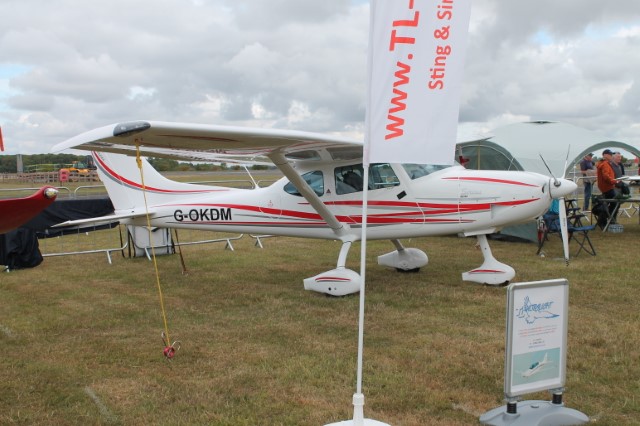
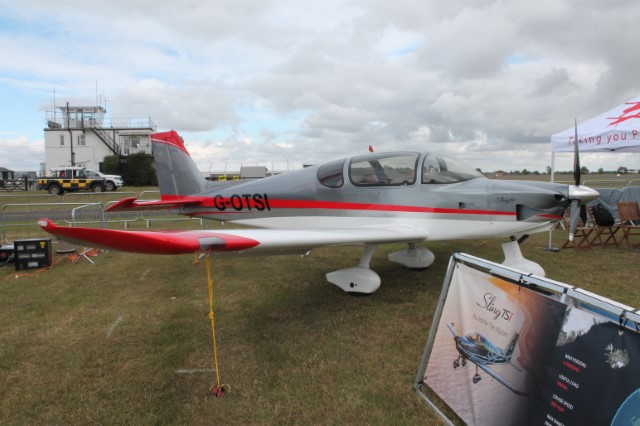
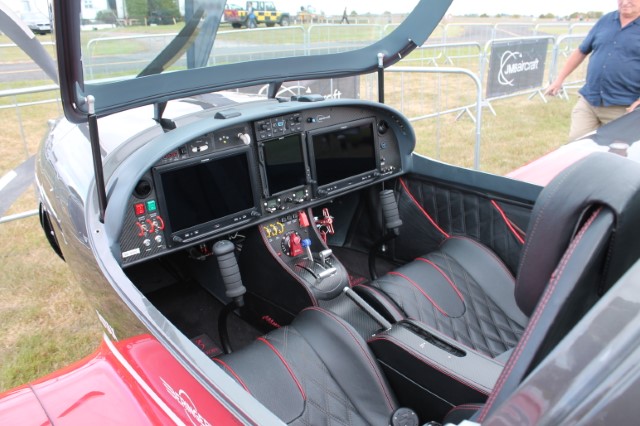
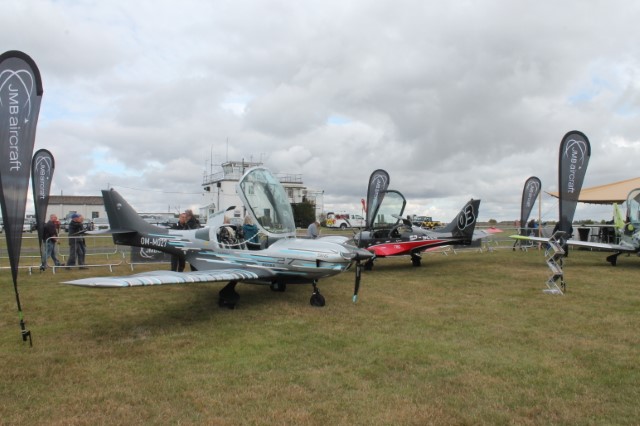
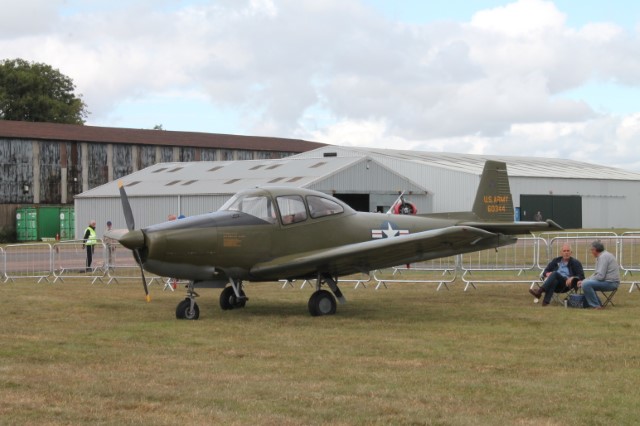
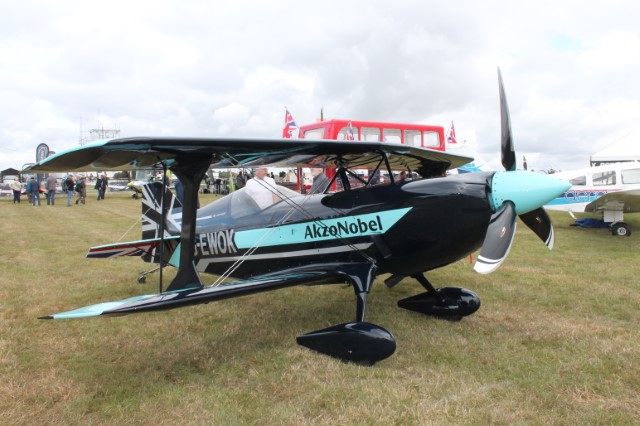
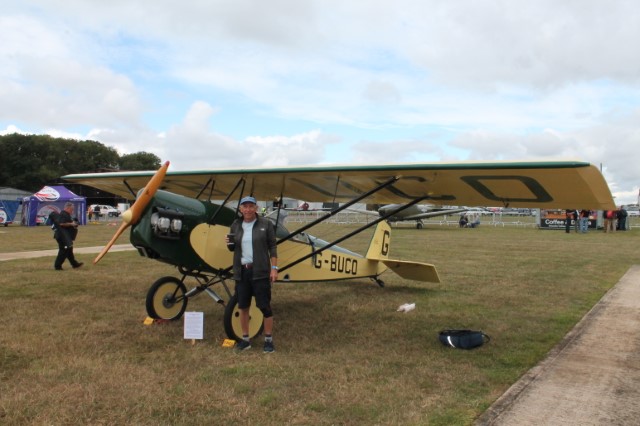
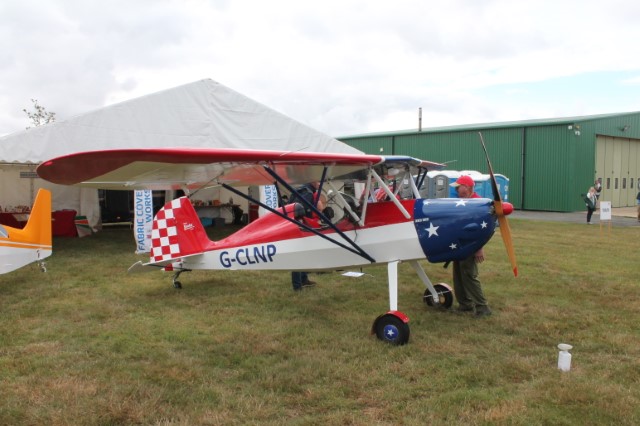
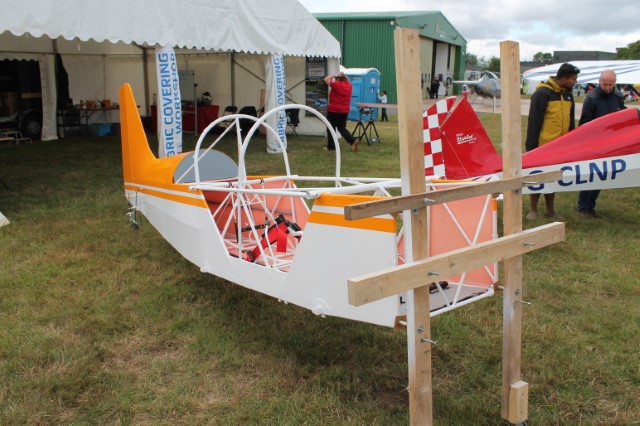
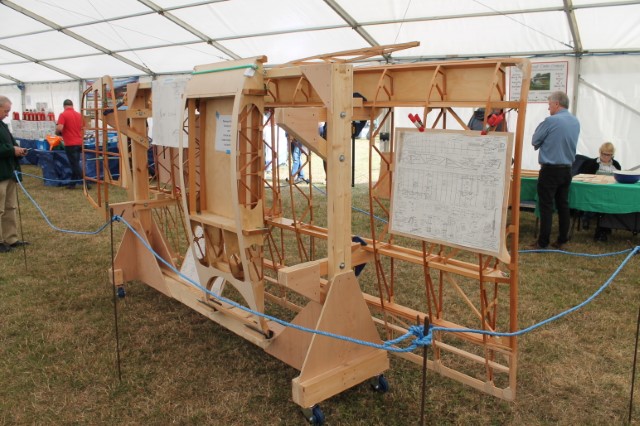

I drove up on the Friday, when the weather was unpromising for aircraft flying from the south. Despite that there were plenty of arrivals by air. I sat in on some excellent talks (Matt Dearden on ‘Flying from Shangri-la, Simon Tilling with a Q&A on the LAA and Rob Hart with some SkyDemon tips and tricks), had some good conversations, a really nice burger – and bought the altimeter I’ve been looking out for really cheap. All in all a great day out!
Simon Tilling, our CEO came across well in his talk; more a question and answer session than a talk as such, which indicated a positive desire on his part to listen to the members. A significant topic was the lack of diversity, particularly of age but also gender in the membership. That the average age of the members goes up by one year each year does not look good for the future. Perhaps unsurprisingly no ‘silver bullet’ fixes were proposed. Cost of entry, contemporary employment pressures and cultural changes (gamer generation…) were all acknowledged. Having said that it is clear that some Struts have a younger profile and organise engaging activities; food for thought…. Actually Simon was a bit scathing about ‘strut’ being the name for local groups, suggesting it reeked of the antiquated biplane era (though I’m sure he wasn’t casting aspersions on biplanes in general). Suggestions for a new name on a postcard please.
The gender imbalance was also discussed, with one member of the audience trotting out the hoary old trope that women just aren’t interested in aeroplanes. Clearly some are and without doubt more could be! I suggested that the young ‘social media influencer’ (sorry about that – but it’s what she is) Xyla Foxlin is an inspiring example. Amongst other things she is building a Pietenpol Air Camper, and has been active in calling for changes in the way that mental health is handled in aviation. See her videos at: youtube.com/@xylafoxlin I’ve already sent that link to my daughter who teaches design and technology, to pass on to her female students.
Richard Griffiths
Regulation Changes Affecting Your License from 1st October
The changes to licensing appear to be positive – but of course the devil is in the detail! Check out the details here: caa.co.uk/our-work/publications/documents/content/cap3155/
I got away with that – but maybe only just!
As an inexperienced second owner of an aircraft, here are a couple of issue that came up recently.
For the last month I’ve been trying to get to the bottom of an issue with the engine monitor, an MGL Avionics E1. The CHT readings were very unstable, jumping between minus and positive values. As I have been sorting out the carburation I really wanted that to be working properly before I fly. I checked the settings in the monitor and all appeared correct. I changed the temperature sensors that looked like they were the issue, with mangled and broken wires at the mounting.
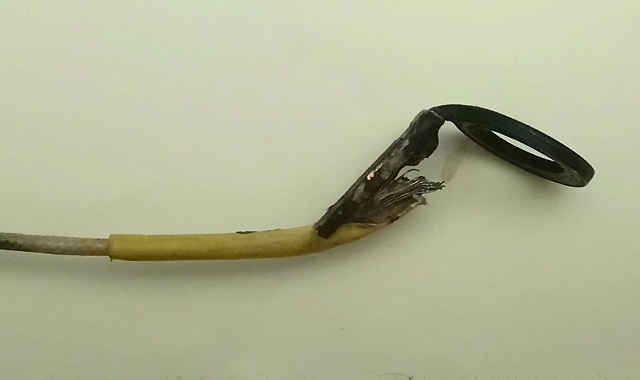
The new ones from MGL actually have the thermocouple in a female spade clip that can be removed from the copper ring washer, so less likely to be damaged when mounting or removing. So I put them in and test ran the engine – no bl**dy difference!
OK, replace the crimped connections on the sensor wires with soldered connections – no difference.
Through re-examination of wiring to find anything loose. Identified one plug cap that was a bit loose, so tightened the spring – possibly a slight improvement, but still a problem.
I was starting to suspect the voltage regulator, as I’d also had an occasional low voltage warning message, but putting a multimeter on the battery when the engine was running gave a steady 14 volts. What next? When all else fails RTFM! Actually I had read the manual previously but a second read revealed this instruction:
It is essential that a single wire be connected from the minus terminal of the instrument to the engine block. This wire must not be used to share currents with other electrical users as this can affect accuracy of readings.
It turns out that wasn’t the setup I had! The ground wire to the monitor was connected to the common ground for all the avionics. There are two D-Sub connectors on the monitor, in my setup, the lower one connecting the power, ground, RPM and error light, while the upper one takes the CHT and EGT inputs. Curiously the manual doesn’t specify pin numbers, but the colour of the wires; presumably MGL supply the made-up plugs. There is supposed to be a black wire from the top D-Sub that is the reference ground, but not here there wasn’t! Taking the D-Sub connector apart, there was a vacant pin solder receptacle that had never been used. I soldered in a (black) wire that I connected directly to the engine block. On testing the engine, problem solved!
Having taken the panel off to work on the monitor, I took the opportunity to fit my new (to me) sensitive altimeter, after making a trip to Shoreham to calibrate it against the QNH. The previous coarse altimeter didn’t have a connection to the static port, so I fitted a T-piece in the static line and connected it to the new altimeter. This caused a BIG problem that only became apparent later.
As everything was looking good, I decided to go for a flight – and discovered the problem…. The POH for the SD-1 instructs that on commencing the take-off run, the stick should be held back to protect the front wheel until rotation speed of 45 kts when it is eased forward to accelerate in ground effect to 60 kts for the climb. As standard practice I checked the ASI early in the run and it was registering positively. At what felt like rotation speed, I checked again to find it only registering about 35 kts. At that moment the aircraft took off. Of course what I should have done then was to pull the throttle and land, even though that end of the runway is a bit rough. I didn’t.
Instead I pitched for 60 kts and climbed. The climb seemed a little slow. Thinking about it, the ASI under reading meant that I was going faster than the optimum climb speed, so not so steep a climb. Also, though I didn’t know it, the altimeters (there is one in the EFIS too) were under reading. I still hadn’t twigged what the problem was, but turning on to the downwind and levelling-off things got a bit weird. Despite my throttling back (though descending a bit), the ASI indicated speed suddenly shot up beyond the yellow arc. Eventually the penny dropped; the ASI was not working and I had a problem.
I briefly considered diverting in to Shoreham, but then I thought If I actually made it over the airfield boundary I was likely to be OK and wouldn’t need the attentions of the fires service. If I was going to stall and crash, better in the countryside than going over the A27. It was going to have to be by the seat of my pants into my base strip.
I set up for a longish final to give myself time to nail the speed. The wind was not particularly strong and fairly aligned with the runway. I throttled back to the point that things felt and sounded like approach speed and set the first stage of flaperons. The SD-1 has two stages of ‘flap’, but so far I have never used second stage to land as it significantly degrades aileron response. The strip has trees close on either side that I want to keep clear of. My intention was to maintain a steady descent with minimal changes to throttle and elevator. That didn’t quite work out, as crossing the small wood before the threshold the rate of descent increased markedly, possibly wind shear. I opened the throttle and gingerly raised the nose a bit, getting closer to the tree tops than was comfortable. The trajectory was now a bit flatter than I intended, but scraping over the hedge was possible and I didn’t want to make any changes. At flare height, I eased back on the stick – and instantly dropped to the ground. Presumably I must have been very close to the stall. With hindsight I see I was extremely lucky it worked out.
So what was the problem? When I inserted a T-piece into the static line, I should also have shortened the line. The static vinyl tube was held behind the panel by a cable tie on the fuel-tank bulkhead. Because the piece running to the instruments was now longer, it sagged when the panel was replaced and had folded acutely at the cable tie.
I had naively though that any problem with the ASI would have been a blocked pitot tube where the symptoms would be obvious – no speed would be shown. A blocked or restricted static tube presents in a more subtle way. If you haven’t though about it, this article is a good briefing: boldmethod.com/learn-to-fly/systems/understanding-pitot-static-blockages-failures-in-flight/ I wish I’d read that before…
At least for a while, my pre-flight is going to include reaching under the panel to feel the static tube for kinks.
Richard Griffiths
Events
Next Strut ‘Club Night’
At The Longshore is on Wednesday 1st October, 7:30 pm.
For a full list of events go to the website Events page.
 Light Aircraft Association Southern Strut